Boston International shipping business

Ship Care Packages


Great ideas on how to ship and what to ship in Care packages to students. Express your love and ship your care packages with us today, we have the right packaging material to ensure that your care package arrives safely and on time. Your loved ones would appreciate it. After the excitement of being on their own wears off, students typically find themselves longing for home.

And while the last thing some students may want is to have their parents visiting every weekend, care packages and letters from home are almost always appreciated. It’s a constant reminder that you’re not going through (the transition to college life) alone, It takes you away from the textbooks for a minute. It really puts a smile on their faces.

Ship Care Packages: Express your love and ship your care packages with us today, we have the right packaging material to ensure that your care package arrives safely and on time. Your loved ones would appreciate it. After the excitement of being on their own wears off, students typically find themselves longing for home. And while the last thing some stud … Read More

via International Shipping Services

Shipping Carrier Scams

Ship Care Packages to your College Bound Kids!


Ship Care Packages:

Express your love and ship your care packages with us today, we have the right packaging material to ensure that your care package arrives safely and on time. Your loved ones would appreciate it. After the excitement of being on their own wears off, students typically find themselves longing for home.

And while the last thing some students may want is to have their parents visiting every weekend, care packages and letters from home are almost always appreciated. It’s a constant reminder that you’re not going through (the transition to college life) alone, It takes you away from the textbooks for a minute. It really puts a smile on their faces.

Care Packages for Students:

Find Correct College Address:

First and foremost, find out where it needs to be sent. Call the college and see if packages can be delivered to the student’s dorm or should they be sent through the college’s student post office. It is also a good idea to get a return receipt, or get tracking for your care packages. This way it is easily tracked if the package should get lost.Take your package to Neighborhood Parcel and they will help you package and ship it to anywhere in the world at some of the lowest rates.

Perishable Items

Anything that may perish within three days is not a good idea to send. This is especially true if the package cannot be delivered directly to your college student’s dorm room.

Send Items They Can Use

Towels, toiletries and laundry detergent are just a few items that any college student would appreciate. Keep them stocked up with these items instead of sending the money for them. This saves them time.

Send Extra

Dorm friends abound, especially when a package arrives. Send a little extra for your college student to share.

Get Personal

Personal items such as pictures of the family dog can uplift any college student out of the studying and too busy funk. Try a humorous card with a personal note, it will make a great memory for them.

Care Packages Ideas:

Food Items for Care Packages

  • Potato chips
  • Corn Chips
  • Pretzels
  • Tea
  • Coffee
  • Hot cocoa
  • Ramen noodles
  • Canned pasta meals
  • Cookies
  • Mints
  • Gum
  • Candy bars or other chocolate
  • Microwave popcorn
  • Mac and Cheese
  • Instant oatmeal

Personal Items for Care Packages

  • Soap
  • Shampoo
  • Conditioner
  • Feminine napkins
  • Tampons
  • Shower shoes
  • Lotion
  • Toothpaste
  • Toothbrush
  • Towel
  • Wash cloth
  • Toothbrush holder
  • Makeup
  • Deodorant
  • Contact lens solution
  • Hairspray

School Supplies

  • Pen
  • Pencil
  • Paper – lined or plain
  • Notebooks
  • Sticky notes
  • Highlighters
    Other Items for Care Packages
  • Roll of quarters, dimes, nickels for laundry room.
  • Laundry detergent
  • Fabric softener
  • Recent magazine
  • Recent hometown newspaper
  • Motivational book
  • Devotional book
  • Air freshener
  • Paper towels
  • Napkins
  • Dish soap
  • Dish cloth
  • Phone card
  • Envelopes
  • Stamps
  • Pictures of recent event
  • Photo album
  • Letters and drawings from younger siblings
  • Video of family sending their love
  • Blank CDs
  • Holiday decorations
  • All purpose spray cleaner
  • Trash can liners 
Featured Wooden Crate Packaging

Crate Packaging History Massachusetts


Crate History in Massachusetts

The first documented writings in the US about shipping crates is in a 1930 handbook (Technical Bulletin No. 171) written by C. A. Plaskett for the US Department of Agriculture although his writing imply that crates were defined before that time. C. A. Plaskett was known for his extensive testing and defining of various components of transport packaging.

Construction of Wood Crates

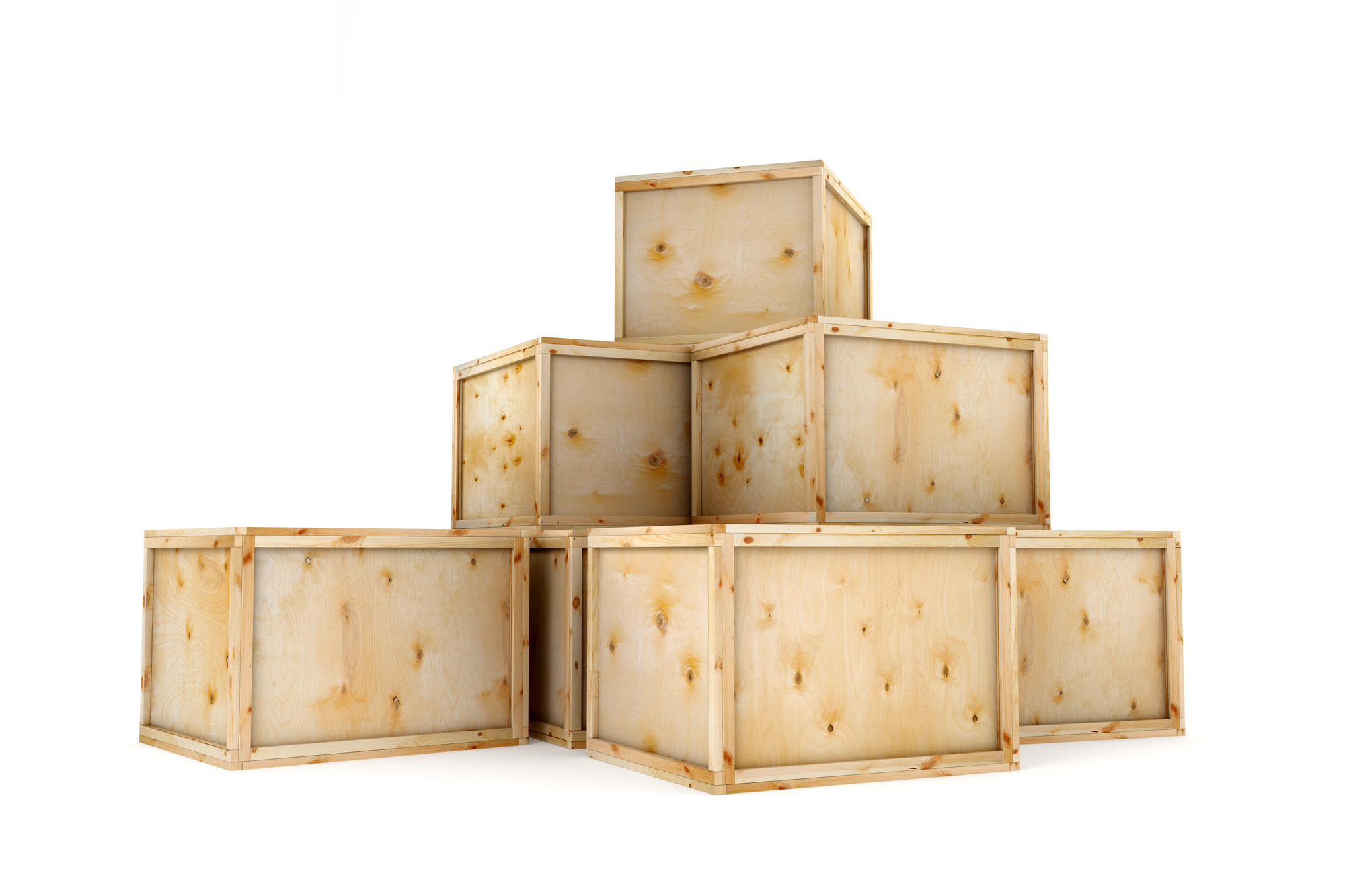
Although the definition of a wooden crate as compared to a wooden box is clear, construction of the two often results in a container that is not clearly a crate or a box. Both wooden crates and wooden boxes are constructed to contain unique items, the design of either a crate or box may use principles from both. In this case, the container will typically be defined by how the edges and corners of the container are constructed. If the sheathing (either plywood or lumber) can be removed, and a framed structure will remain standing, the container would likely be termed a crate. If removal of the sheathing results in no way of fastening the lumber around the edges of the container, the container would likely be termed a wooden box.

Crates can be made of wood, plastic, metal or other materials. The term ‘crate’ often implies a large and/or strong container. Most plastic crates are smaller and are more commonly called a case or container. Metal is rarely used because of its weight. When metal is used, a crate is often constructed as an ‘open crate’ and may be termed a ‘cage’. Although a crate may be made of any material, for these reasons, the term ‘crate’ used alone often implies one constructed of wood.

Design of Crates

There are many variations of wooden crate designs. By far the most common are ‘closed’, ‘open’ and ‘framed’. A Closed Crate is one that is completely or nearly completely enclosed with material such as plywood or lumber boards. When lumber is used, gaps are often left between the boards to allow for expansion. An Open Crate is one that (typically) uses lumber for sheathing. The sheathing is typically gapped by at various distances. There is no strict definition of an open crate as compared to a closed crate. Typically when the gap between boards is greater than the distance required for expansion, the crate would be considered an open crate. The gap between boards would typically not be greater than the width of the sheathing boards. When the gap is larger, the boards are often considered ‘cleats’ rather than sheathing thus rendering the crate unsheathed. An unsheathed crate is a frame crate. A Frame Crate is one that only contains a skeletal structure and no material is added for surface or pilferage protection. Typically an open crate will be constructed of 12 pieces of lumber, each along an outer edge of the content and more lumber placed diagonally to avoid distortion from torque.Ship Wooden crates

When any type crate reaches a certain size, more boards may be added. These boards are often called Cleats. A cleat is used to provide support to a panel when that panel has reached a size that is may require added support based on the method of transportation. Cleats may be placed anywhere between the edges of a given panel. On crates, cleat placement is often determined by the width of the plywood used on plywood sheathed crates. On other crates, cleats are often evenly spaced as required to strengthen the panel. Sometimes two cleats are added across the top panel of a crate placed as needed to give the top of the crate added strength where lifting chains or straps may press on the crate while lifting.

Cleats may have more specific names based on added benefit they provide. Some published standards only use those more descriptive terms and may never refer to these various lumber components as cleats. For example, lumber placed under the top of a wood container to add support for a large top are called “joists”. Lumber is built into the mid-section of the top of a wood container to strengthen the top are called “cleats”. When the cleats are enlarged and constructed to support a large top, they may generically be termed “cleats” or more specifically be termed “joists”.

“Skids” or thick bottom runners, are sometimes specified to allow forklift trucks access for lifting.

Transportation methods and storage conditions must always be considered when designing a crate. Every step of the transportation chain will

result in different stresses from shock and vibration. Differences in pressure, temperature and humidity may not only adversely affect the content of the crate, but also will have an effect on the holding strength of the fasteners (mostly the nails and staples) in the crate.

Although the above definition most always stands true, there are many slightly altered or ‘sub-definitions’ used by and in various organizations,

agencies and documents. This is the result of the small size of the industry and the fact that a single, finite definition of an item that is different every time it is made can be difficult to define.

IATA, the International Air Transport Association, for example, doesn’t allow crates on airplanes because it defines a crate as an open transport container. Although a crate can be of the Open or Framed variety, having no sheathing, a Closed crate is not open and is equally as safe to ship in as a wooden box, which is allowed by IATA.

In general conversation, the term crate is often used to denote wooden boxes and crates simply to shorten the term however in commercial use; the misuse of the term could result in a container that is not suitable for its intended use.

Get your next crate project started on the right foot, Crate shipping

ocean moving containers

International Ocean Cargo Boston MA


Neighborhood Parcel is proud to announce the Successful launch of its newest International Cargo and ocean shipping service website. The International cargo and freight shipping site will allow businesses and consumers to take advantage of our wide network of ship carriers,
Airliners to get the best rates..

“Our Business continues to grow and we want to give our clients an opportunity to move their freight from point A to point B, fast and at affordable price” Said Mr. Bechat CEO of Neighborhood Parcel during Grand Opening Ceremony in Boston MA.

Neighborhood Parcel of Boston MA offers Ocean Cargo, Air Freight, Ground shipping both LTL and Full truck loads worldwide. Ocean Shipping service will allow Businesses and consumers to ship anything from Cars to household goods at affordable rates, car shipping can be done via RoRo or Container shipping. Household Items can be packages in skids or Wooden crates.
Our Air cargo service is reserved for time sensitive merchandise, our wide network of air carriers will give you the best possible rate for the shipment along with optional freight insurance. Small Air packages can be shipped Via FedEx or DHL at rates that are 20 to 60% below retail rates.

In addition to Air and ocean shipping, our Company provides customs solutions that fit all customer needs and budget. From dedicated access to our Executive desk to satisfaction guarantee. For more info on our ocean freight, Air cargo or Crate Service.


freight forwarding Boston ma

ship overseas

How to save on International shipping and Packaging Services


When it comes to international shipping, consumers and businesses must be aware of the cost, further more they need to have the how to knowledge to deal with International export requirement.

Shipping is easy, doing it right can be a challenge, when it comes to international shipping, you can leave it to the professionals to do for a fee or do it yourself and take all the risk.

First you need to know that equation behind shipping cost calculation:
The equation depends on three factors: Zone, weigh and dimensions. This is usually called Dimm weight where if you ship a feather of 1 OZ in large box, you will pay for equivalent 10+ pounds of weight.

You are paying for space in aircraft! So always keep this in mind when packaging. Also be aware that depending on destinations, some countries may refuse the contents, so always check with carriers. Example, Muslim countries prohibit shipment of anything offensive to religion, so sending a Penthouse Magazine to Kuwait will be confiscated.

Here are few tips on packaging:
1. Choose the Right Box
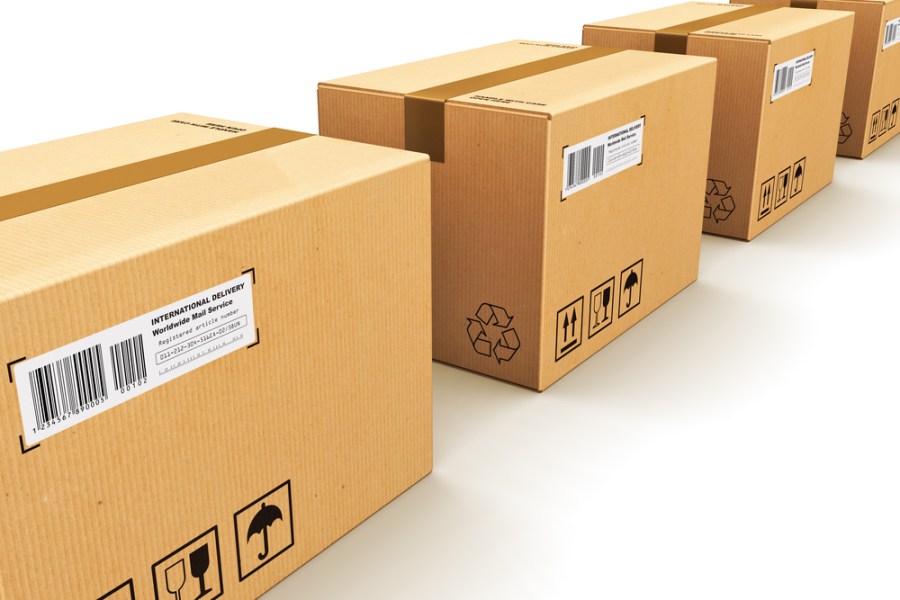
Use a box that is strong enough to protect the contents and large enough to leave space for adequate cushioning. You can also buy various sizes of boxes, as well as padded mailers, mailing tubes, and other packing materials at the store. If you choose a previously-used box, make sure you remove or cross out any old shipping labels, and make sure the box is in good shape, with no weak spots or cracks. Old or new, make sure the box is made of heavy, corrugated cardboard. Thinner boxes, such as most shoe boxes or gift boxes are not strong enough for shipping.

2. Protect and Pack
Don’t skimp on cushioning material. You can use shredded or crumpled newspaper, bubble wrap, or Styrofoam™ peanuts, or even plain air-popped popcorn. Pack items tightly to avoid shifting, and make sure the cushioning material covers all sides of the object.
If you’re shipping several items together, wrap each one separately and provide enough cushioning to prevent movement.

Fragile items need extra protection:

For extra identification, place a return address label inside the package. After packing, gently shake the box. If nothing moves, it’s ready to be sealed.

3. Seal Carefully
A strong seal is essential, so always use tape that is designed for shipping, such as pressure-sensitive tape, nylon-reinforced Kraft paper tape, or glass-reinforced pressure-sensitive tape. These items can be purchased at the store. We recommend you do not use wrapping paper, string, masking tape, or cellophane tape.

Make sure you seal the center seams at both the top and the bottom of the box securely. Cover all other seams with tape, and be sure not to leave any open areas which could snag on machinery.

For more info: http://www.neighborhoodparcel.com